
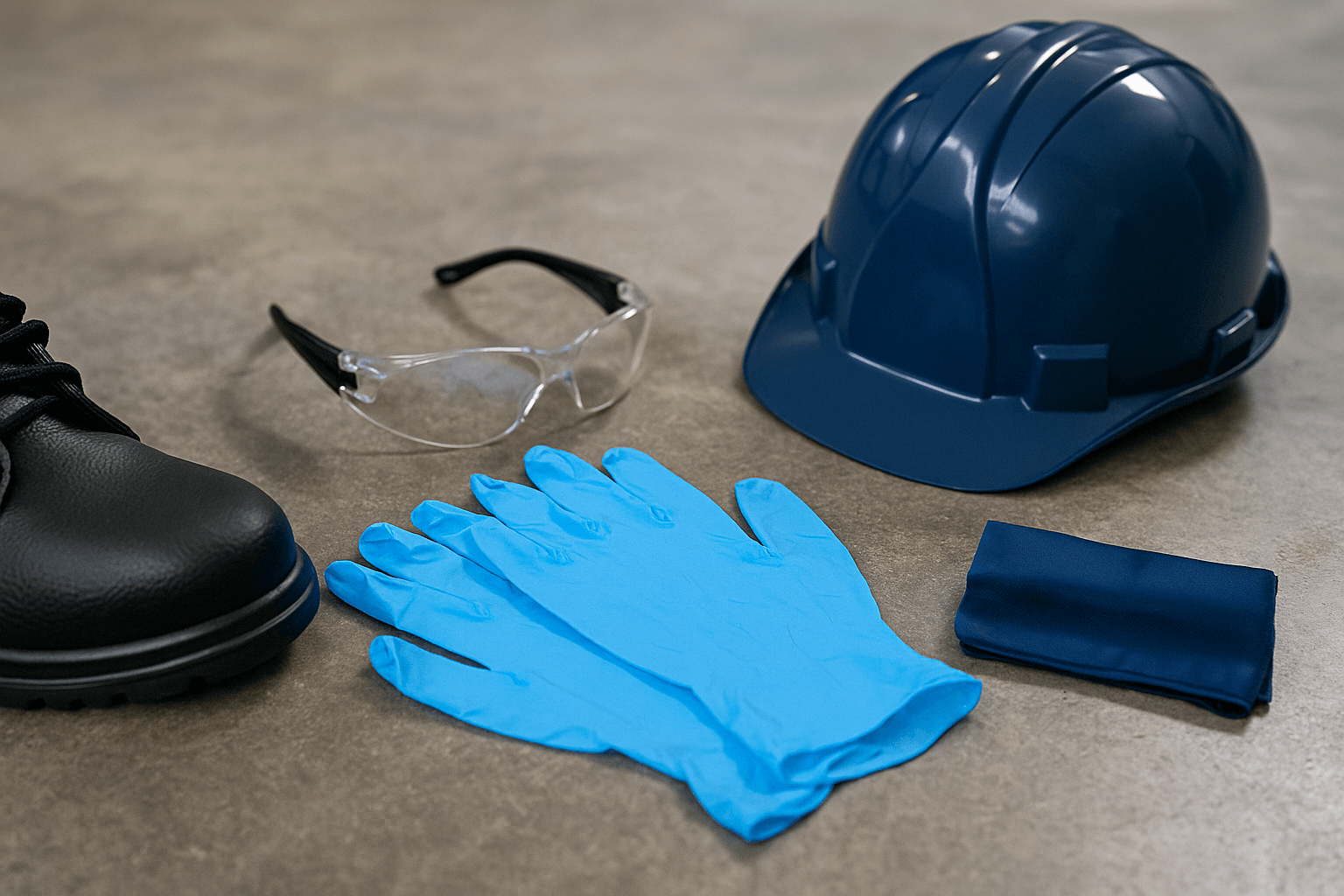
In any industrial or manufacturing environment, worker safety is the top priority. Protecting employees from potential hazards—whether physical, chemical, or environmental—is essential to keeping your factory running smoothly and efficiently. One of the most crucial elements of worker safety is personal protective equipment (PPE). PPE encompasses everything from safety gloves to hard hats, and selecting the right type of PPE is key to minimizing risk and ensuring compliance with safety regulations.
In this blog, we’ll discuss how to choose the right PPE for your factory, with a particular focus on nitrile gloves, a staple in many industries. Beyond gloves, we’ll also cover other essential protective gear that every factory should consider.
Why PPE is Critical for Factory Safety
PPE serves as the first line of defense between your workers and potential hazards. In a factory, workers are often exposed to a range of dangers, such as:
Chemical exposure: Handling solvents, oils, and other chemicals.
Physical injuries: Risks of cuts, burns, abrasions, and falling objects.
Electrical hazards: Potential for electrical shock or burns.
Thermal hazards: High or low temperatures that can cause burns or frostbite.
Biological risks: Exposure to infectious materials in certain environments.
By equipping your workers with the right PPE, you reduce the likelihood of injury, ensure operational efficiency, and comply with workplace safety regulations.
Choosing the Right PPE for Your Factory
When selecting PPE, it’s important to consider the specific risks associated with the tasks your workers perform, the materials they work with, and the environment they operate in. PPE should be chosen based on the hazards you need to protect against, and different types of PPE offer protection from different risks. Here’s a look at some essential PPE for factories, starting with nitrile gloves and extending to other critical safety gear.
1. Nitrile Gloves: Protection Against Chemicals, Oils, and Contaminants
Nitrile gloves are a staple in nearly every factory setting, from automotive workshops to pharmaceutical labs. Their popularity stems from their versatility, durability, and ability to provide protection against a wide range of hazards.
Why Nitrile Gloves?
Chemical Resistance: Nitrile gloves are known for their superior resistance to chemicals, oils, and solvents. This makes them ideal for workers who handle hazardous substances such as cleaning agents, oils, adhesives, or chemicals.
Puncture Resistance: Nitrile is more puncture-resistant than latex or vinyl, which means it provides better protection for workers handling sharp objects, such as metal parts or glass.
Latex-Free: Nitrile gloves are latex-free, making them a safer option for workers with latex allergies.
Comfort and Fit: Nitrile gloves are designed to conform to the hands for a snug, comfortable fit, offering great dexterity and tactile sensitivity.
When to Choose Nitrile Gloves
Chemical handling: For workers in manufacturing or chemical plants.
Food processing: Protects against contamination and foodborne pathogens.
Automotive or mechanical work: For workers dealing with oils, grease, or sharp components.
2. Safety Glasses and Face Shields: Eye and Face Protection
Safety glasses and face shields are essential for protecting workers from flying debris, sparks, splashes, and chemicals. These pieces of PPE are crucial in environments where workers may be exposed to physical or chemical hazards that could cause eye injuries or burns.
Why Safety Glasses and Face Shields?
Eye Protection: Safety glasses protect against flying debris, dust, and chemicals, which can cause severe eye injuries.
Face Shields: A face shield provides additional protection for the face, covering the entire face and offering more extensive protection from splashes, heat, or projectiles.
When to Choose Eye and Face Protection
Welding: Workers involved in welding are exposed to bright light, sparks, and flying debris.
Chemical Handling: Workers mixing chemicals or dealing with liquid hazards should always wear eye and face protection.
Manufacturing: In environments with machinery, sparks, or small debris, safety glasses and face shields can prevent serious injuries.
3. Hard Hats: Head Protection from Falling Objects
Hard hats are one of the most commonly worn types of PPE in construction, manufacturing, and factory settings. They protect workers from head injuries caused by falling objects, overhead equipment, or collisions with machinery.
Why Hard Hats?
Impact Protection: Hard hats are designed to absorb the force of impacts, protecting the head from injuries caused by falling objects or accidents.
Electrical Protection: Some hard hats come with electrical insulation properties, which are crucial for workers exposed to electrical hazards.
When to Choose Hard Hats
Construction Sites: Protection from falling debris or materials.
Factory Floors: Especially in areas with overhead machinery or equipment.
Mining Operations: To protect workers from falling rocks or equipment.
4. Safety Boots: Foot Protection from Heavy Machinery and Chemicals
In factory environments, foot protection is essential to prevent injuries from heavy machinery, sharp objects, or hazardous materials. Safety boots with reinforced toes and slip-resistant soles provide stability and protection from workplace accidents.
Why Safety Boots?
Steel Toe Protection: Safety boots often feature steel toes, which protect against impact or compression injuries from heavy equipment or falling objects.
Slip Resistance: Many safety boots have slip-resistant soles, reducing the risk of slips and falls on wet or oily surfaces.
Waterproofing: For environments where workers may encounter wet conditions, waterproof boots help prevent moisture-related injuries and discomfort.
When to Choose Safety Boots
Heavy Equipment Handling: Workers who operate forklifts, cranes, or other heavy machinery.
Construction Sites: Where falling debris or materials pose a risk.
Chemical and Hazardous Environments: Workers exposed to chemicals or hot surfaces need boots that provide chemical resistance and heat protection.
5. Hearing Protection: Protecting Against Loud Machinery
Excessive noise from factory machinery and equipment can cause hearing loss over time if proper protection is not worn. Earplugs and earmuffs are essential PPE for workers in noisy environments.
Why Hearing Protection?
Noise Reduction: Earplugs and earmuffs help reduce the impact of loud sounds, preventing hearing loss and fatigue.
Comfort: High-quality hearing protection is comfortable to wear for long periods, especially in environments where workers are exposed to high-decibel noise throughout their shifts.
When to Choose Hearing Protection
High-Noise Areas: Factories with machinery like presses, welders, and compressors.
Construction Sites: Where workers are exposed to heavy equipment like jackhammers, drills, and engines.
Assembly Lines: In environments with high-pitched, continuous noise from machines.
6. Respirators and Masks: Breathing Protection from Dust and Fumes
Respirators and face masks are crucial for protecting workers from inhaling harmful particles, dust, fumes, or gases that can lead to long-term health problems like respiratory diseases.
Why Respirators and Masks?
Dust and Particulate Protection: Respirators protect against inhaling harmful dust, chemical fumes, or other particulate matter in the air.
Chemical Exposure: Certain masks are designed to filter out gases and vapors from chemicals that could harm workers’ lungs.
Versatility: Masks and respirators come in various designs, including disposable options and full-face models, to suit different environments.
When to Choose Respirators and Masks
Manufacturing and Welding: Protection against harmful fumes or airborne chemicals.
Construction and Demolition: In environments with high dust levels or asbestos.
Pharmaceutical and Laboratory Work: To protect against chemical vapors or biological contaminants.
7. High-Visibility Clothing: Enhancing Worker Visibility
In environments where visibility is poor—such as factory floors with moving machinery or outdoor construction sites—high-visibility clothing ensures that workers are easily seen by their colleagues and machine operators.
Why High-Visibility Clothing?
Safety in Low-Light Conditions: High-visibility vests, jackets, and shirts feature bright colors and reflective strips, making workers visible from a distance and reducing the risk of accidents.
Compliance: Many industries require high-visibility clothing as part of safety standards, especially in areas with heavy vehicle or machine traffic.
When to Choose High-Visibility Clothing
Construction Sites: Workers who are exposed to moving vehicles or large equipment.
Factory Floors: In areas where machines and forklifts are in motion.
Roadside Work: For workers performing maintenance or repairs in areas with vehicle traffic.
Conclusion
Selecting the right PPE is an essential part of ensuring safety in your factory. While nitrile gloves are an essential protective gear for handling chemicals and oils, they are just one part of the equation. Other PPE, such as safety glasses, hard hats, hearing protection, and respirators, provide comprehensive protection against various hazards.By carefully considering the specific risks present in your factory and selecting the appropriate protective equipment, you can minimize workplace injuries, improve productivity, and ensure the health and safety of your employees. Keep your workforce safe by investing in high-quality PPE and making sure it is always readily available.



Add comment