
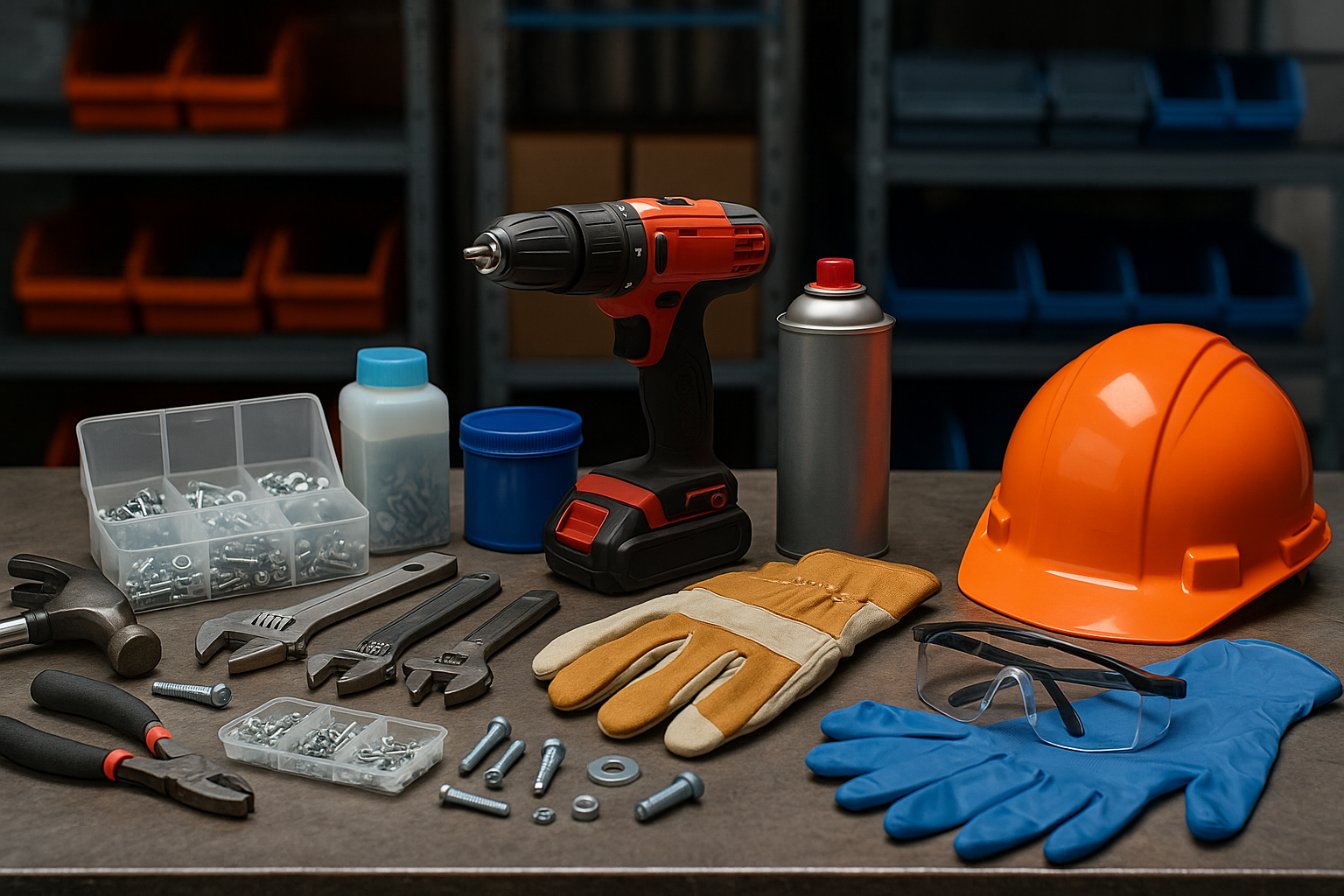
Your production line is only as strong as the tools and supplies backing it up. No matter how advanced your equipment is, without the right MRO supplies, even the best machines can grind to a halt—and cost you time, money, and credibility.
Whether you’re overseeing a factory, warehouse, or commercial facility, having the right Maintenance, Repair, and Operations (MRO) inventory is essential to keep everything running. But not all supplies are created equal, and stocking random tools “just in case” isn’t the same as having a smart, intentional MRO strategy.
In this guide, we break down what your maintenance team really needs—and how to build an MRO system that’s lean, responsive, and ready for anything.
What Are MRO Supplies?
MRO supplies are the behind-the-scenes essentials that keep your facility running. They don’t go into the final product, but they make the production possible.
MRO includes:
Tools and equipment for repairs
Spare parts and hardware
Safety and PPE gear
Cleaning and janitorial items
Lubricants, adhesives, and sealants
Testing and diagnostic tools
In short: if it helps fix, maintain, clean, or protect something, it falls under MRO.
Why Getting MRO Right Matters
Reduced Downtime: The faster your team can diagnose and fix a problem, the less money you lose in halted operations.
Improved Safety: The right PPE and maintenance protocols lower the risk of injury and liability.
Longer Equipment Life: Proper upkeep and lubrication save on costly replacements.
Lower Inventory Costs: A smart MRO system avoids overstocking and understocking.
The Essentials: What Every Maintenance Team Should Have
Here’s what a well-prepared maintenance department should keep in stock—and why it matters.
1. Core Tools and Equipment
Your maintenance crew can’t work without their basic toolkit. These are the non-negotiables.
Must-Haves:
Wrenches, screwdrivers, pliers, hammers
Cordless drills and impact drivers
Multimeters and circuit testers
Torque wrenches for precision tightening
Why: These tools form the foundation for electrical, mechanical, and structural maintenance tasks.
2. Lubricants, Greases, and Oils
Proper lubrication is what keeps your machinery from grinding itself into a breakdown.
Must-Haves:
Multi-purpose greases
Chain lubricants
High-temperature oils
Spray lubricants for tight spaces
Why: Routine lubrication prevents wear and extends equipment life.
3. Fasteners and Hardware
These small parts keep everything together—and they disappear faster than you think.
Must-Haves:
Assorted nuts, bolts, screws, washers
Anchors and rivets
Threaded rods and retaining clips
Why: Having a well-organized supply of fasteners allows for quick repairs without delays.
4. Electrical Components
Power issues happen. Your team needs to be ready to troubleshoot and repair electrical systems.
Must-Haves:
Fuses and breakers
Wiring and cable ties
Terminal blocks and connectors
Electrical tape and wire strippers
Why: Fast electrical fixes prevent safety hazards and keep operations running.
5. Safety and PPE Supplies
Safety isn’t optional. You need gear that protects your crew and meets OSHA/industry standards.
Must-Haves:
Nitrile gloves, cut-resistant gloves
Safety goggles and face shields
Hard hats, hearing protection, high-vis vests
Respirators or dust masks
Why: PPE is essential for preventing injury and ensuring compliance during repairs or inspections.
6. Cleaning and Janitorial Supplies
Clean machines work better—and clean workspaces are safer.
Must-Haves:
Degreasers and solvents
Industrial wipes and rags
Brooms, mops, floor cleaners
Spill kits and absorbents
Why: Prevents buildup that leads to breakdowns, and reduces slip/fall hazards.
7. Adhesives, Sealants, and Tapes
When you need a fast fix or a strong bond, these products are key.
Must-Haves:
Silicone sealants
Epoxy and industrial adhesives
Electrical, duct, and double-sided tape
Pipe thread sealant
Why: These provide quick solutions that hold up under tough conditions.
8. Spare Parts and Consumables
Downtime often happens because a single part fails. Be ready with critical replacements.
Must-Haves:
Belts, bearings, and filters
Hoses and gaskets
Fittings and couplings
Light bulbs and batteries
Why: Having high-failure-rate components in stock can cut repair time drastically.
9. Measuring and Diagnostic Tools
If you can’t measure it, you can’t fix it.
Must-Haves:
Calipers, micrometers, tape measures
Infrared thermometers
Pressure and vacuum gauges
Flow meters or fluid level indicators
Why: Accurate diagnostics help prevent guesswork and get to the root of issues faster.
10. Labeling, Signage, and LOTO Systems
Organization and safety depend on clear information and procedures.
Must-Haves:
Label makers for wires, tools, and shelves
Lockout/Tagout kits
Safety signs and floor markings
Maintenance logs and tags
Why: Helps avoid human error and increases workplace safety.
How to Keep Your MRO Supplies Organized
Having the supplies isn’t enough—you also need systems to track and manage them. Here’s how:
Set Par Levels: Know your minimum quantity for each item and reorder before you run out.
Use Inventory Software: Track usage and location of each supply to prevent overstock or shortages.
Label Everything: Every drawer, bin, and box should be clearly labeled and easy to access.
Audit Regularly: Monthly or quarterly checks ensure nothing is missing or expired.
Final Thoughts: Don’t Let a Missing Bolt Stop Your Factory
MRO supplies aren’t glamorous. They don’t show up in product photos or marketing decks. But they’re absolutely essential to keeping your factory alive and your workforce protected.
The best maintenance teams don’t wait for things to break—they prepare. With the right MRO supplies, your team can handle problems fast, reduce downtime, and extend the life of your equipment.Don’t just buy tools. Build a system.
Your factory depends on it.





Add comment